
















































The Project
Bangor Cathedral required a comprehensive upgrade to its sound reinforcement and streaming capabilities as part of ongoing improvements to support worship, music, and wider engagement.
The project focused on delivering a highly discreet, intelligible PA system suitable for a large, reverberant cathedral, alongside a flexible multi-camera live streaming system. The design prioritised ease of use, architectural sensitivity, and future scalability, while retaining key existing infrastructure such as the induction loop system.
The Challenge
As with many historic cathedrals, the space presented several technical and practical challenges:
- Achieving clear speech intelligibility in a highly reverberant environment
- Installing equipment discreetly within a sensitive heritage setting
- Providing simple, intuitive control for clergy and volunteers
- Expanding microphone and input capability for varied services and events
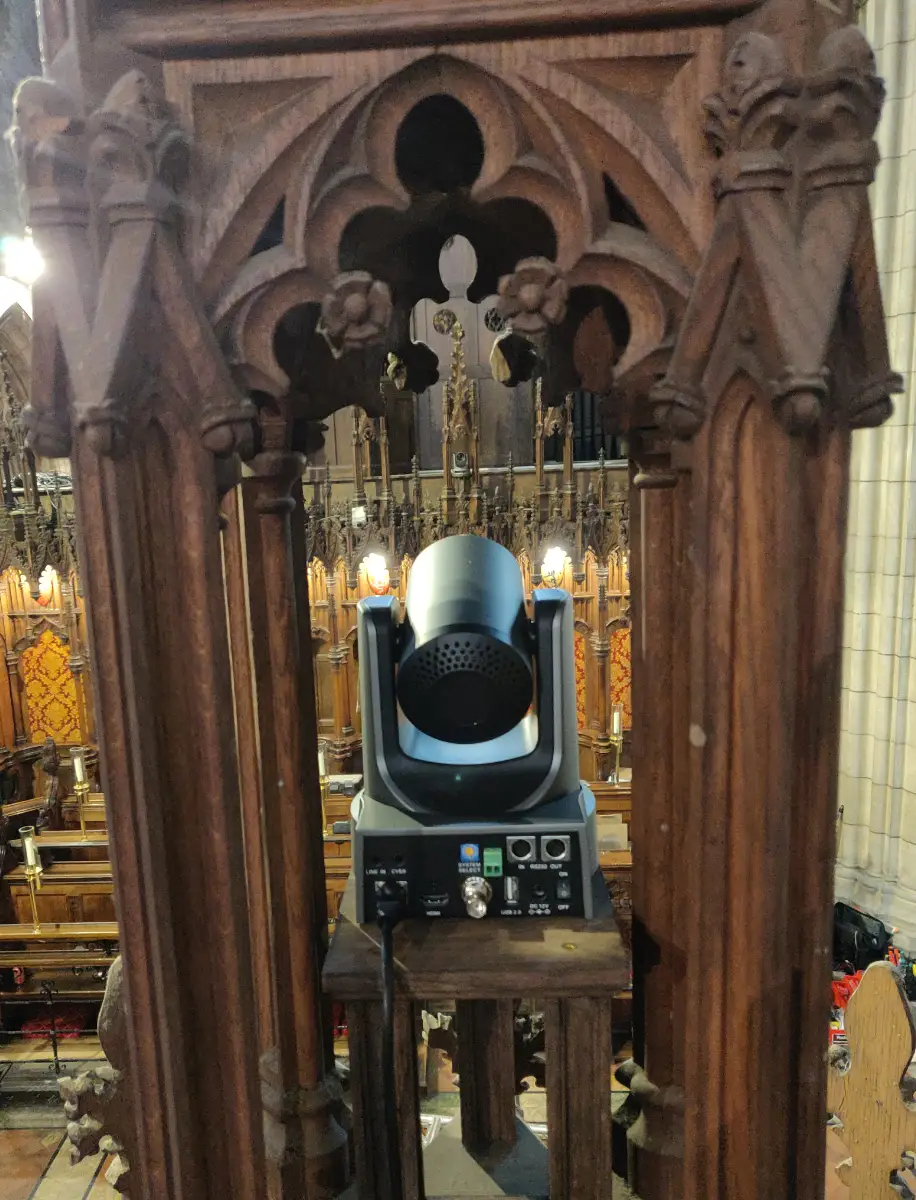
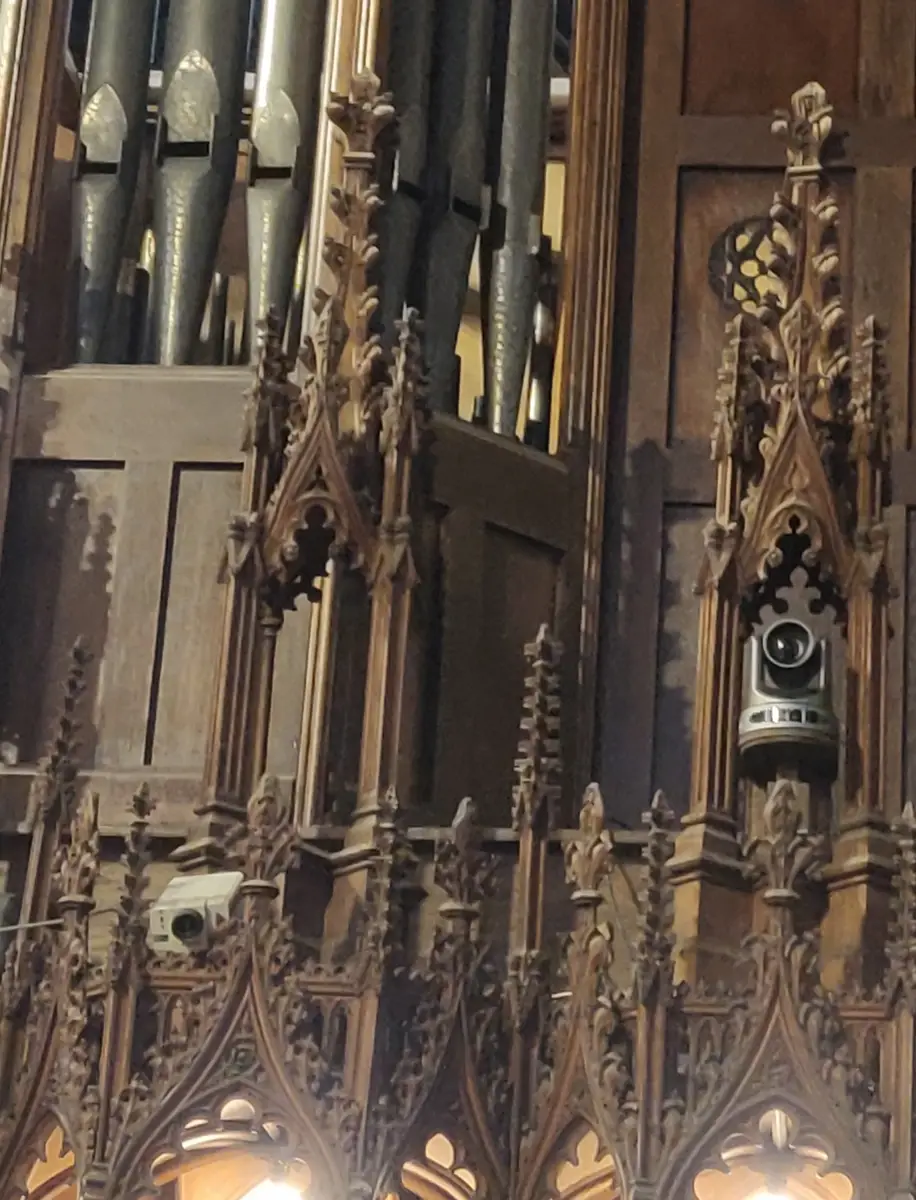
- Integrating a multi-camera streaming system without visual intrusion
- Improving infrastructure while reusing existing systems where viable
- Delivering additional enhancements within the existing project budget
Key Features
PA System
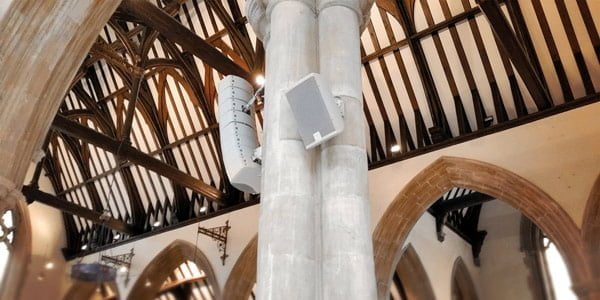
- New discreet column array loudspeakers across nave, aisles, crossing, presbytery and Lady Chapel
- Additional high altar speaker to improve coverage at the east end
- Custom-painted loudspeakers to blend with interior finishes
- Reuse of existing induction loop system and amplification
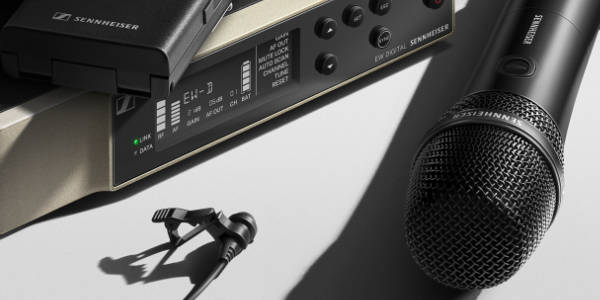
- Expanded radio microphone system with handheld, lapel and altar microphones (all rechargeable)
- New gooseneck microphones for lectern, pulpit and clergy positions
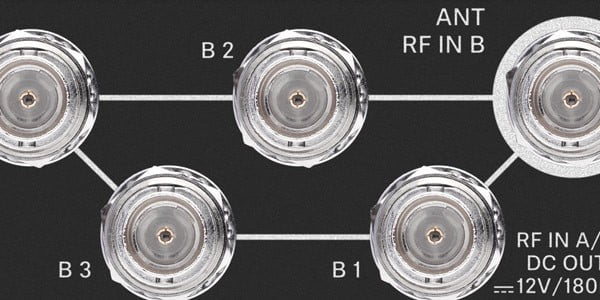
- Remote antenna distribution system for reliable RF coverage throughout
Control & Processing
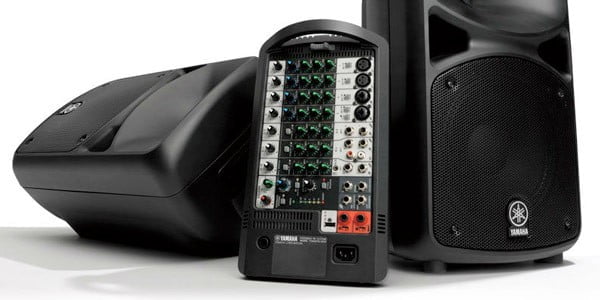
- Digital mixer/processor system with automatic preset recall on startup
- Simple master power on/off operation with sequenced startup
- Wireless tablet-based control for volume, sources and playback
- Integrated audio recording to USB/SD card
Infrastructure & Installation
- Relocation and upgrade of PA rack in organ room for improved access and organisation
- New microphone sockets installed and upgraded to more discreet finishes
- Additional connection points for future flexibility
- Extremely discreet cabling and hardware installation throughout
Live Streaming System
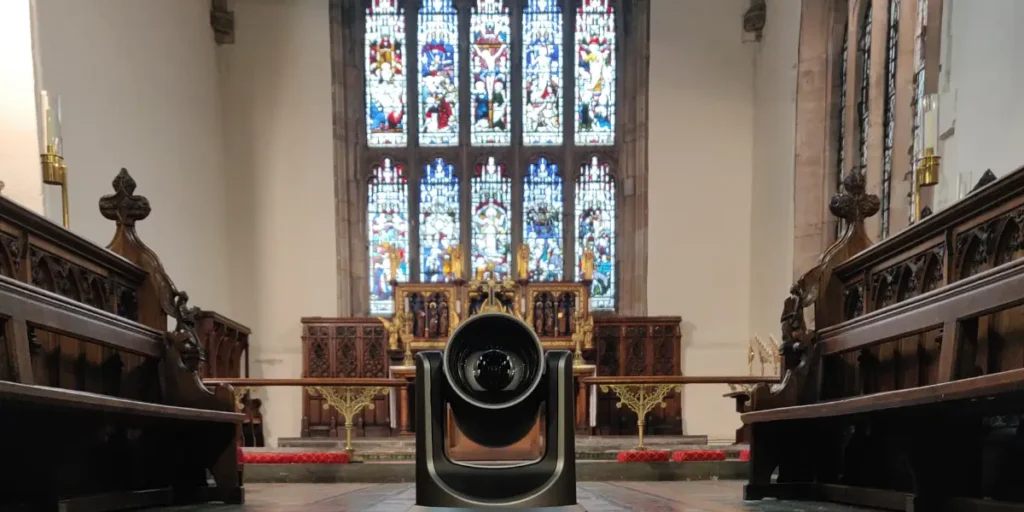
- 6-camera HD PTZ system providing full coverage of nave, choir and crossing
- Multiple streaming control positions across the cathedral for flexible operation
- Integration of PA audio (including choir, organ and congregation microphones) into the stream
- NDI-based video network for simplified cabling (single cable per camera for power, control and signal)
- Streaming encoder and control interface enabling simple operation with preset recall
- AV output points for temporary aisle display screens during large services
Organist Video System
- New high-definition, low-latency monitoring system for organists
- Two discreet static HD cameras positioned at high level
- Integration with selected PTZ cameras for enhanced visibility
- Replacement of outdated legacy monitoring equipment
The Solution
The completed system delivers a high-performance yet unobtrusive audio and streaming solution, carefully tailored to the unique demands of Bangor Cathedral.
The column array loudspeaker system provides focused, even coverage, significantly improving speech clarity while minimising unwanted reflections. Additional speakers at key locations, including the high altar and Lady Chapel, ensure consistent coverage throughout.
A modern digital processing platform simplifies operation through automatic presets and intuitive controls, allowing the system to adapt easily between different service styles—from spoken liturgy to full choral performances.
The 6-camera live streaming system enables the Cathedral to broadcast services with professional quality while remaining easy to operate from multiple positions. Integration with the audio system ensures a rich and immersive experience for remote viewers.
Finally, thoughtful infrastructure upgrades—including improved rack layout, discreet connectivity, and expanded input capability—ensure the system is robust, scalable, and ready for future development, all delivered without exceeding the agreed project scope.